Showing posts with label Storytelling. Show all posts

Tuesday, March 24, 2015

Week 10 Storytelling: Panchali's Trials

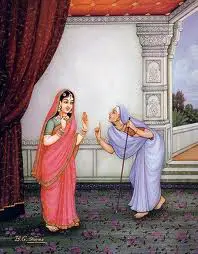
Note: This scene is of Panchali, in disguise, while she is attending to Queen Sadesha's hair.  This is the day after Kichaka's funeral, where Panchali was supposed to perish, but was saved by her husband Bhima.  She is under the alias Sairandhri.

"My goodness, have I not gone through enough?!" Panchali confided in the Queen as she was preparing her hair. 


"Oh darling Sairandhri, you sound distressed tell me everything," replied the Queen.  Queen Sadesha was clearly intoxicated and high off the sweet perfumes in her palace, so Panchali was assured she could confide in the Queen without worrying about blowing her cover.  


"First, my hand was won in marriage by a strong gandharava, but I was not allowed to marry just him.  He had four other brothers whom he was very close with, and the five had shared everything throughout their whole lives.  Because of this, this gandharava didn't know how to possess anything on his own. In my father's eyes, and by common law, I was rightfully his so I had to agree to marry all five of the brothers.  The eldest is very wise, and had come up with a scheme where I would spend a whole year with one brother, and would rotate to another's home when time had ended."


The Queen interjected, "Five husbands?!"  "My dear that must have been some feat having to juggle and pleasing so many different men," Sadesha continued.  


"It was odd at first my Queen, but I learned to love each brother for their special qualities," replied Panchali.  "This was only the beginning of my torment for only after a few years of marriage, the eldest and wisest of my husbands' had gambled everything he owned, his brothers, and finally himself. Although, technically, I am one with my husband and would have been included in his possessions, I was not going to allow my dignity to be gambled away.  I protested to my husbands' opponent that I was not an object to be owned, but this fool grabbed me by my hair and drug me to the assembly floor."


"HE DID WHAT?!" the Queen exclaimed.  


"Oh my Queen, it gets better than this.  I explained that I was in the middle of my menses, but this man was already on a role with his atrocities.  He denounced my husbands and made them undress themselves of their fine clothing.   As he tried to do the same with me, I reminded him of my monthly and told him how vile he was.  This statement was ignored and he was already reaching for my sari.  I threw my hands up in the air and asked the gods to help keep my dignity.  Every time this man tried to remove one of my sari's, a new one had taken it's place until he grew tired of trying to remove my clothing.  There was literally a pile high enough to dress all the women in your court." 


"You don't say," said the Queen, "You have gone through so much." 


"Thats not even it, we were exiled soon after that.  Overtime I ended up in your kingdom and was appointed head hairdresser in your court. My husbands had taken a vow to become invisible during our exile and always watch over me with a protective eye.  Even with this in mind, you vile brother still had an eye out for me."


"Hey!"


"Sorry, too soon? Don't expect me to be sorrowful for Kichaka's death considering he violated me and all."  

"You're right, but remember that I let you remain in my kingdom only because you promised your husbands wouldn't cause anymore troubles."  


"Yes my Queen, I am well aware of this, but on with my rantings.  A while after I had arrived,
 your brother had an eye out for me, and like I previously said, he violated me.  Prior to this event I graciously asked your husband, the great King, to dismiss his brother-in-law, but was hurriedly dismissed myself.  I was so infuriated, can a girl not catch a break?  Anyway, shortly after this was when Kichaka acted and the same night my husbands took care of him.  I thought this would end my streak of bad luck with men, but I was blamed for Kichaka's demise and was ordered to be burned in his funeral pyre!  I was deeply hurt my Queen, how is a woman supposed to defend herself around here? She isn't, and when her husbands step in to take care of her honor she is then blamed for another man's violations?  It just doesn't make sense."


(Draupadi in Virata's palace. Source: Wikipedia)

"Yes, my dear I am very sorry for all of that," the Queen stated in a very drunken state, "I was sad and upset. I wasn't in a mood to otherwise defend you against my husband. If it wasn't for our new cook's delicious food and drink, there was no swaying the King's decisions once his mind is made up. You should thank the cook for he is the one who was able to save you from that horrible fate."  


Panchali was very grateful for the cook, who was Bhima (one of her husbands) in disguise, and she knew in her heart that he was the one who had ultimately saved her.  


"My Queen, thank you for your council and listening to all of my grievances,"  Panchali said after thinking for a bit. She poured the Queen another glass of fine wine and slipped in a sleeping potion that would make her forget the conversation they previously had.  Even though Panchali knew that the Queen was terribly drunk, she didn't want to take any chances on her remembering anything about the conversation they just had. Especially when her exile would end in a matter of two weeks time.  Once the Queen was asleep, Panchali slipped from the palace and went to visit with Bhima to thank him for coming to her rescue the day before.  


Author's Note:

When I originally read the epic, where it mentioned Kichaka "assaulting" Panchali I didn't automatically assume he had raped her.  When this was confirmed, a thought came to mind on how much this woman had to endure so far and what was to come in the future. After looking over the storytelling prompts, I noticed one regarding to Bhima saving his wife at the funeral pyre.  This along with my previous thoughts inspired me to create a story about Panchali's frustrations.  I wanted to have a story where she felt comfortable venting to someone, and since she was a hairdresser I thought what a perfect scenario. If you're wondering why I chose to use Panchali instead of Draupadi in my story, it's just easier for me to spell and read so I decided to go ahead and use it.  

I chose the image I used in order to try and convey how defeated Panchali must feel when she learns that she is to be burned at the funeral pyre. 


Bibliography:
Narayan, R. K. (1978). The Mahabharata.

Thursday, March 12, 2015

Week 9 Storytelling: Bishma's Childhood

Ganga didn't know what to do with this child that she hadn't drowned.  She was not aware of this sudden twist in the prophecy.  She was under the impression that she was put on Earth for a brief time to give to the eight children, and then she would return to her watery environment.  

She had already done her part in giving birth to Devavratha, her eighth infant, and was already on her way to delivering him back to heaven when Shantanu stopped and questioned her actions. As she was nearing the river's shore, Shantanu broke through the brush calling her name.  Nearly breathless he asked for an explanation of her actions. Ganga replied," My loving husband, you have done as I've asked for so long, but today you have questioned my actions."  As a side note, when Ganga and Shantanu met she requested that he never question her actions or she would leave him forever.  The goddess continued,  "Today I will take your youngest child, Devavratha, to heaven with me in order to teach him humanly ways.  He was supposed to return to heaven, and was born only of godly matter, but since this was interrupted he must live an adult life here."  With this last statement Ganga took her infant and descended into the river's water.  


As they descended Ganga was contemplating how she could teach a half mortal to be completely mortal.  She decided that she should have her son be a holy man and brought him to Brahma.  It was known among the gods that Lord Brahma was the father of Manu, who then became the father to all human beings.  She traveled to heaven and bowed before the Lord with her infant in her arms. He knew why she was there, and gave her instruction on what she would do with her last son. She was to bring him to her river home, for she was free now that she had fulfilled what was asked of her in regards to the curse. While there, Devavratha would serve and tend to her home.  Devavratha would also learn about the human way of life through prayer and meditation.  Through serving in Ganga's home, Devavratha would become a wise and disciplined young man who will be human once returned to his father.  While back on Earth, though, he would be a loyal servant to whoever rules over his father's throne, because he would not be able to rule himself. Devavratha would not know this, since he is an infant, but he would be cursed and have taken an oath of celibacy throughout his human life. This seems dreadful to a mother, but this will keep Devavratha's heart pure and he would ascend to heaven when final peace has been granted to the kingdom that was once his father's (foreshadowing the quarrels of the future Pandavas and Kauravas).  The Creator had made his declaration, and Ganga returned home to the river. 

 She was very happy to finally return home and once Devavratha was old enough, she set him to work on his spirituality and discipline as Brahma had instructed.  When the day came, and Devavratha had grown in to handsome and wise young man, Ganga brought him to the river shore that they had left behind.  She had sent word to Shantanu, who was eagerly awaiting their arrival.  Ganga said her goodbyes to her son and previous husband, and then descended back to her home.  Ganga had faith in Brahma and Devavratha, and was always watching her son from afar though she knew better to ever meddle with human relations.  


Author's Note:  
I chose this story since I had literally so many avenues that I could pursue.  The epic only introduces the background of the curse, and when Ganga brought (the future) Bishma back to his father.  While reading the epics, I’ve noticed that many great men of have spent a lot of time meditating or serving another for a period of time.  This was done in order to obtain their wisdom and discipline.  I chose Lord Brahma for Ganga, to visit for advice, since he is The Creator and grandfather of all humans.  I tried not to leave any important details out that we were introduced to in the reading, but at the same time I didn’t want to take away the focus of Bishma’s childhood.  So far, we have not read of any intervention of Ganga, in regards to Bishma’s adulthood, but I wanted to give her some motherly instinct and have her watch over him from a distance.  I also included why she would never intervene if Bishma were to encounter trouble. 

Bibliography:
Narayan, R. K. (1978). The Mahabharata.

Thursday, February 26, 2015

Week 7 Storytelling: The Golden Statue

Rama was thrilled to learn that Sita was still alive, and that he had two young sons who survived his foolish decision.  He could not believe that after ruling his kingdom for over 10,000 years, that this is when the people began to spread rumors about his wife.  But as any other good king, he put his kingdom first, and sent Sita to the forest to let destiny decide whether or not she survived.

In his grief he made a golden statue in his wife's image, and kept in in her living quarters of the palace.  King Rama never had eyes or lust for another woman, for Sita was the only one he was destined to be with.  When Lava and Kusa had sung of his adventures in the Ramayana, he knew that these were his sons, for they were in his likeness.

Rama sent Lakshma to Valmiki's home, and the next day it was arranged that Sita would return to Adyodha and the great festival will end. The crowd had gathered early in the morning, and Rama had Sita's golden statue returned to the kingdom during the night.  The Queen entered the crowd of people, as beautiful as ever, and Rama held his breath in excitement.  Instead of embracing Rama, though, Sita had asked her husband permission to prove her innocence once again.  This was granted, and Sita asked her Mother to take her back to her underground home for good. Before Rama could object, Mother Earth rose to the surface and looked to all of the crowd, her husband (Janka), and her lovely daughter.  Mother Earth had lost patience with Rama and his people, took Sita in to her lap, and they disappeared underground.  All the people of the crowd rejoiced for Sita's innocence, but deep in Rama's heart he was sad that he would not see Sita every again.  He took this as an act of Karma, and brought his sons home when the festival ended.


When Rama returned to Ayodha, he went to Sita's living quarters to see if her statue was still there. It was, and he had decided to keep it standing there for his sons and his sanity.  Another 1,000 years had  passed, and Time requested that Rama return heaven where all the gods were awaiting his arrival.  Rama agreed and made preparations for this.  He called his ever faithful servant Hanuman and asked him, "My most devoted follower, will you accompany me on my journey to heaven?"  Hanuman was surprised with this request, and it took him a minute to gather his thoughts.  Eventually Hanuman replied, "My King, as delightful as this sounds, I believe that it is my mission in life to remain on Earth as long as there are ears yearning to hear about your great deeds in the Ramayana.  I must make sure that scribes and storytellers only tell the story in 100% truth. Look how after 10,000 years of ruling, the men of your very own kingdom have turned their backs on Sita, although the Ramayana tells of how she remained innocent while in captivity."  Rama realized that Hanuman was right, and was very grateful that he was willing to take this task upon himself.  Rama replied, "Hanuman, for your unbreakable devotion to me and my kingdom, I grant that after my leave you will take possession of the golden statue made in Sita's likeness.  You are the only one that I trust enough to ensure to tell of her braveness, loyalty, and significance in the Ramayana." After this was decided, Rama felt better about leaving his kingdom behind.  The great King departed for his last journey to Sarayu and onto heaven.  Hanuman was there to see him off, and had only happiness in his heart for the King that he loved deeply.


A few days after Rama's depart.  Hanuman created a temple for anyone in any region of the Earth to come and hear about the Ramayana. He created a shrine for Rama and Sita, and in the place of Sita was the golden statue created previously.  Anytime Hanuman would lay eyes on the shrine, or told another about the adventures of the great king, his heart was filled with gladness.

Author's Note:
For this story, I tried telling about the fate of Sita's golden statue after Rama had departed for heaven.  Throughout reading this version of the Ramayana, it bothered me that Rama left her in the forest, even after I read the ending and learned that it was for "the good of the kingdom."  When looking over storytelling prompts, I thought that it was interesting that we do not find out what happens to the statue in the end.  I decided that since Hanuman was such a devotee of Rama, and that he was the one to find Sita in Ravana's garden, he would be the one to receive and care for the statue.  I felt that if anyone else were to be put in charge of it, it would have eventually been neglected.  I also thought about how over time the citizens of Ayodha forgot how courageous Sita was while waiting for Rama to save her, and felt that if someone like Hanuman did not continue to tell the Ramayana in its true form that Sita's name would once again be defamed.

Bibliography:
Buck, William (1976). Ramayana: King Rama's Way.

Thursday, February 19, 2015

Week 6 Storytelling: Monkey in a Dragon

Hanuman was feeling good about himself and his travel over the ocean.  He was thinking to himself how future generations would speculate on how a monkey could magically grow in size, and jump across a great sea in order to reach Lanka.  Hanuman had already left Mainaka, a great mountain with golden wings hiding in the sea from Indra, who attempted to return a favor to Vayu (the wind god).  Vayu had protected Mainaka from Indra before, and now he felt compelled to let the great Hanuman rest.  Hanuman was so energetic, fueled by his mission to find Sita, that he did not want to rest and in return granted Mainaka peace from feeling like that he had to repay Vayu in anyway.

Lanka's shores were growing larger and larger, and so did Hanuman's excitement.  Gradually, he began to see a streak of red intermittently flashing in the ocean below him.  At first Hanuman disregarded the unusual site, for he was more focused on reaching the land ahead of him.  All of a sudden a large dragon head popped out of the ocean and tried to grab Hanuman's tale.  If you did not know, a monkey's tale is his pride and joy, and this was enough to delay Hanuman's flight just for a moment.  Hanuman waited for this creature to make another appearance above the water, when the next thing he knew was in it's mouth.

(The top image is one version of Sinhika swallowing Hanuman: Source)

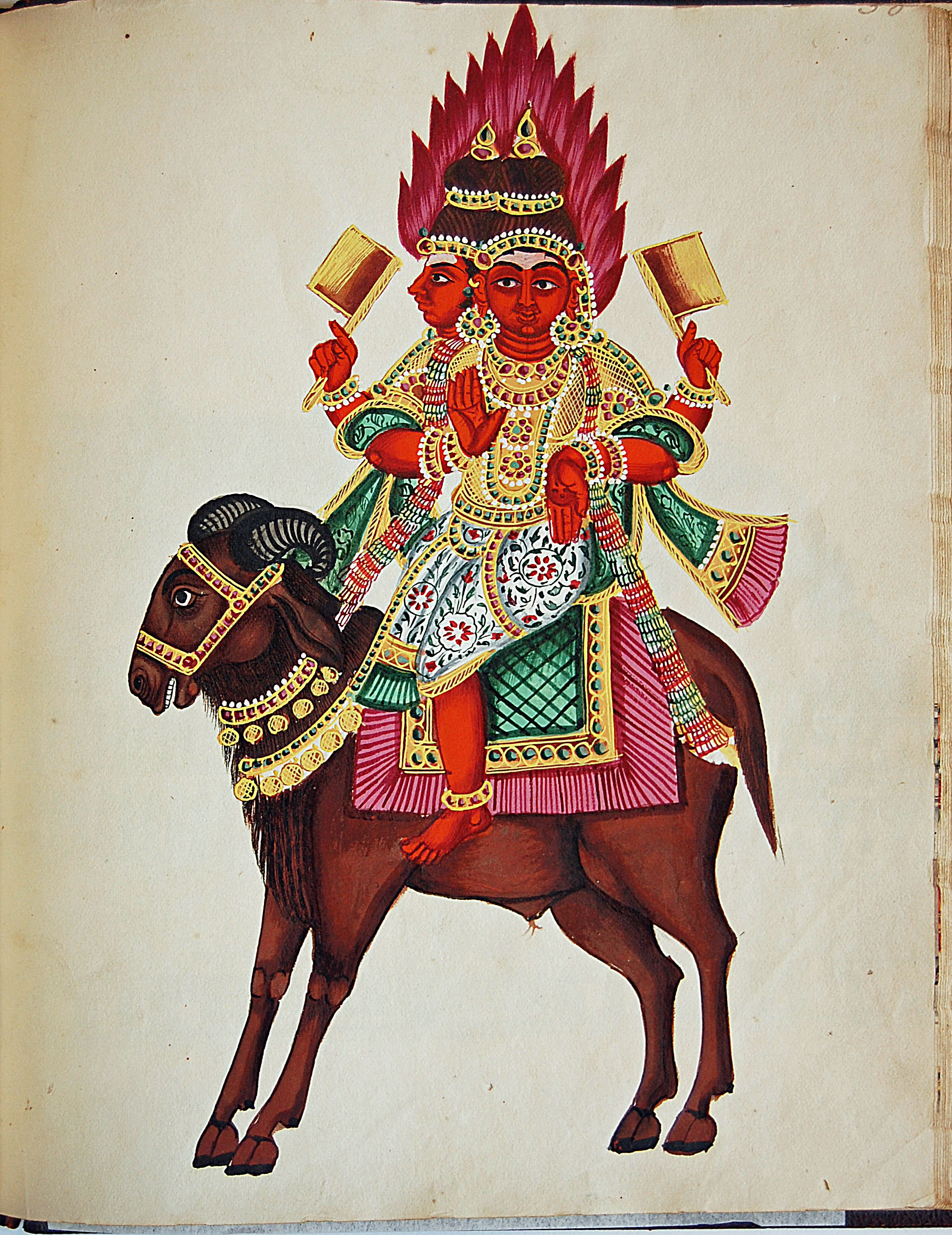
Hanuman shrunk to a minuscule size, injured the creature's heart, and finally escaped through their ear.  Hanuman knew he only had a few moments before the brute's demise, and demanded an explanation for such a rude attack.  The creature spoke, "I am Sinhika, a rakshasi, and I am the protector of Lanka's shores.  You are not a fellow demon, and I have made an attempt to prevent you from reaching your destination."  Hanuman replied," Do you demons lack knowledge of proper battle etiquette?!  You must never attack a warrior that is not already in battle, especially when their back is to you."  Sinhika howled in laughter, and said with her last breath, " Oh honorable monkey you must not know the ways of us rakshasis.  If you continue to use this noble mentality you will not survive in Lanka, for she herself will attempt to approach you as an illusion and kick you down.  With my last breath, since you have defeated me, I will advise you not travel in Lanka in your natural form, but do so as a cat in the night.  No one will look at you twice with suspicious eyes."  With these last words Sinhika died, and the large fish of the sea disposed of her body.

Hanuman continued his route to Lanka, thinking about Sinhika's last words.  He contemplated whether he should follow the advice, or do the exact opposite.  As he neared Lanka's gates he saw how magnificent the city was.  He climbed high into the trees, and hit for a while scouting the outer gates to look for any weak spots.  The closer in proximity that he go to the city, he noticed that her form began to change until all he saw was an old woman sitting in the road.  At this moment Hanuman decided that he would trust in Sinhika's finals words, assumed the form of a cat, and ventured off to approach Lanka in the road.

Author's Note:
 Hanuman's leap to Lanka was pretty uneventful, expect for speaking to Mainaka and his encounter with the female demon.  Although the main focus of this tale was to tell about Hanuman's short battle with Mainaka, I wanted to give the mountain some credit along with a brief background, in order to not confuse my readers.  The image of Hanuman being swallowed in this week's Reading Guide is what inspired me to retell this section of the epic (seen here).  I added more dialogue between the duo, and tried giving Sinhika more significance by having her advise Hanuman what to do while in Lanka.  I ended with Hanuman approaching Lanka in the form of a cat, because I thought this part was very interesting, and gave Sinhika the credit for Hanuman's transformation.

Bibliography:
Buck, William (1976). Ramayana: King Rama's Way.


Wednesday, February 11, 2015

Week 5 Storytelling: Ravana's Curse

My dear readers, we have come back with the story of Sita and how she was rudely brought to Lanka under the personal agenda of the demon king, Ravana.  In previous tales, I had introduced Vayu (the wind god who is also Hanuman's father) and have told you about his significance in Sita's survival in Lanka by bringing her food and information until this point in time.

In the beginning, when Ravana first brought her, Vayu put it upon himself to bring Sita whatever she needed behind the seething eyes of her Rakshasis guards.  Vayu is a god, and pretty invincible, but he was also old in age, and needed some help in caring for Rama's bride.  After bringing Sita some dinner one night, he sent a message to the Lord Brahma asking for some assistance.  Vayu's prayers had been heard and Indra was summoned to visit Sita in Ravana's garden.  Indra brought Sleep with him, who cast a deep slumber over the kingdom of Lanka.  Indra thanked Vayu for all he had done, and relayed Sita would not need anymore food subsistence.  He asked Vayu to continue to provide Sita with information about Rama, when needed, and to let her know whether any message from Ravana consisted of the truth.  Although this was relief for him, Vayu still stayed close the maiden until her husband's return.

Indra entered Sita's entrapment in the garden and told her not to fret.  He gave her some blessed food and water, stating that it would keep her satisfied for a years time.  He also reassured her that Ravana would not try to make any advances on her, for he was cursed long ago.  Sita being curious asked what the parameters of the curse were so that she would be able to properly protect herself if and when Ravana would visit her.

Indra began the story of Ravana's curse:

After Ravana's heaven and earthly campaign to conquer was over,  the Demon King decided to settle down to rule in Lanka.  He loved his wife Mandodari very much, but he quickly became greedy and soon set out on a journey to obtain beauty.  Any female creature he found appealing, he took, and progressed on his way killing anyone who objected.  Ravana had the great skill of persuasion, and it was easy for him to manipulate many into becoming another wife.  He was coming near the end of his expedition when he decided that all he needed now was to make an Apasarasa his wife, and his "collection" would be complete.  Ravana set course to mount Kailasa, and waited until someone crossed the path leading down to the nearby village.  It wasn't long until the beautiful Rambha came down from heaven to visit her husband Nalakubra.  Ravana approached her, asked where she was going, and beckoned her to sit next to him in the grass to converse.  Rambha tried to reason with Ravana, "Aren't you the new ruler of heaven, everyone knows so?  If that is true you are my King, elder, and guardian technically."

(An image of Rambha: Source)

 Ravana replied, "You are right, I am the rule of heaven and all!  Because of this, I demand that you learn to love me this very instance."  Rambha knew she wasn't going to be able to steer Ravana desires, and began to weep loudly.  Unbeknownst to the duo, Nalakubra's home was near the path and he had overheard their conversation.  Nalakubra was wise enough not to directly approach Ravana, for he knew he would be eliminated where he stood, and instead climbed to the top of the mountain, which was directly above where the pair was located.  Rambha's husband gathered his wit, and as soon as he witnessed Ravana begin to advance towards his wife he let out a curse heard in all directions. He bellowed, "Ravana you have no sanctity, and from this moment you are cursed to never be able to take from a woman what she is not willing to give you! If you even try, then your ten heads will burst off your shoulders!" Ravana, frightened by Nalakubra's words, left the scene and made his way back to Lanka thinking to himself that he had already obtained enough beauty to keep him entertained.

Sita interjected Indra's story at this point, " If Ravana was not allowed to approach a woman who would not have him, what about the "wives" that he had already taken."  Indra answered, "These women took pity on Ravana at this time, and felt protected by the curse, so they decided to come to Lanka anyway and live the lavish life Ravana had promised.  But do not fret, Sita, your husband will come for you soon after the rainy season. Continue to depend on Vayu to relay the truth of any news that is brought to you about his progress."

Now that their conversation was over, and Sita felt more inspired than ever in seeing Rama again, Indra and Sleep left Lanka.

Author's Note:
For my readers who have not visited my page before, the beginning of my story correlates with stories I had written in Week 2 and Week 3.  I started reading Buck's version of the Ramayana before Narayan's came in the mail, so I had already written Week 4's story a long time ago, and was too lazy to change it and continuing with my Vayu character.  This week I brought him back, and will decide after completing next week's reading, whether or not he will continue to make an appearance.  When I had first read Indra's story of Rambha and Ravana's encounter, I thought it was interesting enough to rewrite it.  As I'm sure most of you were, I was a more than a little mortified that Ravana had raped his nephew's wife (which I discovered after a little Wiki search on Nalakubra).  So in my remake, I have Nalakubra come to Rambha's rescue, all the while still holding true to Ravana's curse and why he cannot just do what he wants with Sita.  If I made the story confusing in the beginning of this retelling, and you felt as if the intro was irrelevant, please let me know!  I am always up for some constructive criticism.

Bibliography:
Buck, William (1976). Ramayana: King Rama's Way.


Thursday, January 29, 2015

Week 3 Storytelling: Sita in Lanka

If you had not read my great tale from before, you may not know that Vayu is the father of Rama's devotee, Hanuman.  Vayu is the god of wind, and one of the many gods that the demon King Ravana had conquered and made slave of his court and kingdom. You would have also missed the part where I explained that Vayu had to ability to be everywhere at once, and to grant life to throughout the Earth.  All the gods knew of the prophecy once Ravana was granted his boon.  He was so arrogant that he believed that only celestial creatures would want to see the end of him.  Ravana was granted eternal protection from all beings except for humans and monkeys. The great Rama's entire existence was centered around marrying the most beautiful woman in the world, Sita, and ending the demon King's reign of terror.  

Onto present day, and back to Vayu, he had just witnessed the heart breaking scene of Ravana carrying Sita, on a slab of dirt, into his court.  She was very distressed, and was calling for him to return her to Rama before he sought the demon's death.  Ravana was amused by her threats, but was quickly becoming annoyed.  He ordered that an entrapment of sorts be made in the garden, directly outside the biggest window of his bed chamber.  Vayu observed all of this unseen, for he had the power of invisibility, and went to tell his friend Agni (the fire god) about the situation.  Once he had Agni convinced that their salvation was near, Vayu went to observe what the kingdom had to say about Sita's presence.  

Much to Vayu's surprise the kingdom was in quite a stir.  The many consorts of the King were growing concerned that Ravana would grow tired of them, and banish them back to their homeland.  The demon army was growing excited, for it had been many years since Ravana took them out on raids to overcome the many gods on Earth.  Vibhishana, Ravana's younger brother and advisor, was growing anxious over his brother's well being and began plans on how he could convince the King to surrender to Rama. 


Once Vayu was done listening to the opinions of the Lanka, he decided to pay Sita a visit.  He made himself invisible at first to see what kind of environment and situation that she was in.  There were some fearsome looking rakshasis' surrounding her around the clock.  They were trying to convince her to just give in to Ravana, to forget about Rama, and that the demon King would be able to please her for an eternity in ways that her human husband wouldn't be able to.  After hearing this for a little while, Vayu decided enough was enough and sucked the breath out of their bodies temporarily.  He made himself visible only to Sita and reassured her that if she continued to refuse Ravana that she would remain safe.  He gave her a secret signal (only known between the two of them), so that if she ever needed anything he would be able to bring it to her, or he could determine whether a messenger is telling her the truth or lies.  This is how Sita kept her determination while waiting for Rama throughout the next rainy season and year.  Anytime someone would try to deceive and lie to her about what was going on, even when the demons tried to bring her what appeared to be a decapitated Rama, Sita would always wait for Vayu's signals on whether or not her audience was telling the truth.  Vayu's son, Hanuman, was a devotee of the great Rama, and the human king-to-be would be the one who was going to grant him salvation.  The least he could do is aid Sita during her time in the demon kingdom. 

Author's Note:
Since the wind god is able to be in all places as once (or least I depict him in this way), I decided to try and make a part II of the story I wrote last week [3].  Since Narayan's version of the Ramayana doesn't give readers much insight on how Sita's stay was like in Lanka, and how she survived, I decided to give Vayu the credit.  Since Vayu is known as the wind god, I really emphasized on his abilities of being all-seeing and how he can be perceived as in many places at one time.  I thought it would be interesting to make a continuation of last week since someone commented about how they would like to know more about Sita's capture. 

I am aware that we are put into different "comment" groups each week, and those who I will be paired with will be different from last time.  Even though I tried to continue from last week's story, I tried to catch the reader up so they didn't feel like they were missing out on anything. For my new readers, please don't hesitate to point out if I made anything confusing, I'll gladly try and make them clear!

Bibliography:
Narayan, R. K. (1972) The Ramayana.

Thursday, January 22, 2015

Week 2 Storytelling: Ravana's Servants

Vayu was once a mighty god that gave life to the Earth and all of it's inhabitants.  Before Ravana's reign of terror, Vayu was one of the most important.  Now, he is only a lowly servant that is in charge of keeping the Demon King's marble palace spotless from dust.  Unlike his dear friend Agni, Vayu was optimistic though while working for Ravana for he had a great secret.  Everyone in the three worlds (human, god, and demon) knew that when Ravana was granted his boon by Brahma, he only asked for protection from gods and powerful beings.  He did not request to also be resistant to monkeys nor humans.  What Ravana did not know about his swift servant is that he fathered a monkey named Hanuman.  Hanuman was a devotee of Vishnu and his human reincarnation known as Rama. 

Vayu Deva.jpg
(Vayu)

When Vayu sensed Ravana coming for him in the mountains, to take him as a servant, he quickly left clues that only a monkey could find.  His only mistake is that he scattered them too far apart from each other, and monkeys are notorious to have a short attention span.  Hanuman was able to find all the information he needed about Rama, but he never found the clues that located the city of Lanka in case they ever needed to find Ravana there. 

Back to modern day, as Vayu was swirling dirt around the main courtyard, a large commotion was coming from the entrance of the palace.  There was a woman screaming, and it was a voice that Vayu had not heard before.  He quickly made himself invisible and made his way to where the noise was coming from.  He saw a slender woman fighting Ravana's grasp, yelling about how her husband was going to come after him.  Could this be?! Has the time for the gods be set free come, and the world rid of the Demon King?! Vayu was overcome with excitement and went to see his closest friend Agni. 

Agni god of fire.jpg
(Agni)


"Agni" called Vayu, "We shall be set free at last, for Rama has finally made Ravana his target!"  Agni was a cautious individual, hated gossip, and didn't believe anything unless he heard it with his own ears or seen it with his own eyes.  Agni said, "Vayu, I now accept my undesirable position as the palace's lighter.  Leave me be, and don't fill my head with ideas!" Vayu smiled at his dear friend's response because he could tell that Agni was at least a little interested.  "I am telling the absolute truth my friend, I swear" said Vayu, "As soon as the sun sets this evening go to the King's chamber and when you light his lamps look out the biggest window and you will see a beautiful human woman.  This is Sita, Rama's wife."  "Rama.. Rama?!" called Agni, "Oh the prophecy must being coming true!" With that Agni went off to see Sita for himself and Vayu to tell the other servant gods.   The kingdom began to quietly stir.  The gods were not worried about alerting Ravana for he stayed alone and locked in his private chamber, tormenting himself over Sita's beauty.  

Author's Note:
I decided to create a short story about two of the many servant gods that Ravana had in his court.  I feel that they are merely mentioned, and not given the recognition they deserve.  I followed the prompt provided in the Week 2 Storytelling Ideas, then added some extra information about Vayu.  I knew that Hunaman would be an important player coming up, and thought it was interesting that Vayu was his father, so I decided to mention that here.  Since Sita's capture hasn't officially happened in this week's assigned reading, I decided to leave these details out.


Bibliography:
Narayan, R. K. (1972) The Ramayana.


Wednesday, January 14, 2015

Week 4 Storytelling: Manthara's Plot

Manthara was an elderly woman who was loved only by King Dasaratha's youngest consort, Kaikeyi.  She helped Kaikeyi raise Bharata, and looked to him as one of her own children.  She was a malicious woman, and always looked out for the best of her own while disregarding others.  When she heard through the servant grapevine that King Dasaratha was making Rama next to take the throne, she became very disgruntled. She had an infamous dislike for Dasaratha's eldest son, for when he was a young boy he injured her when he shot an arrow into her bum.  

When she first heard the news, many thoughts began to circulate in her mind, "What will happen to me now?  Why does Dasaratha see Rama a better heir than her dear Bharata?  What if the king decides to relocate himself and his wives to the countryside, away from the city?  What would I do in the country?!" 

Manthara decided to come up with a plot in order to make sure none of her previous thoughts would take place. She wanted to see Bharata on the throne before Yama called Death after her, and she knew if she was to come up with a plan she must do so quickly.  Manthara made her way to the royal library, and began to look over documents the royal scribes had written over the King's history.  While reviewing the material she came across a battle that Kaikeyi told her about in the past.  Dasaratha was badly wounded in battle, and was nearly dead when Kaikeyi saved him.  At this time the King was so delighted he asked his young Queen to wish for two things, and he would grant them immediately.  Kaikeyi loved Dasaratha tenderly, and was just happy he survived the battle.  She instructed that he save the wishes for a time in the future, for she could think of nothing but his well being at this time.  After reading about this event, Manthara grinned to herself for she now had the key ingredient to her poisonous plot.

She gathered herself and made the journey to Kaikeyi's private quarters, scheming along the way.  Lost in her thoughts, she collided with a nobleman who was making his way to a meeting with the King.  The nobleman was angered with Manthara, and cursed her for the next fourteen years after Rama is crowned king.  He stated that the god Yama and Death will visit her in her home and take her to hell.  Manthara became frightened and ran from the nobleman, but now she had even more incentive to convince Kaikeyi to have Baharata crowned.  She decided that she would have the Queen use her second wish also, and have Dasaratha exile Rama to the forest for fourteen years in order to have Baharata establish his ways to the people of Ayodya.  Just as she gathered all her thoughts, and finalized the story she would tell the Queen, she reached the royal quarters.  She took a deep breath, and entered Kaikeyi's private room, calling her name.

Author's Note:
For my Storytelling post this week, I decided to write about Manthara and her influence on Rama's story, and most importantly his exile.  She seems to have been the catalyst to all the trouble, following the King's decision to make Rama his next in line to the throne.  While doing research on Manthra's character, it has been said by many sources that if she was not included in the Ramayana, that there would be no story at all!  Although her mention in this section of the reading was brief, her impact was powerful, and I was left wondering why she felt compelled to convince Kaikeyi to prevent Rama's coronation.  It was mentioned in Buck's Ramayana that Manthara has some animosity towards Rama when he shot her with an arrow in his childhood, but no other incentive for her actions was provided. When we read Narayan's version, Rama reflects on how cruel he was to Manthra when he was child, and comes to the conclusion that he played a part in his own exile. I decided to come up with the curse on her life, by the nobleman, in order to justify with why she specifically chose fourteen years for Rama's exile.

Bibliography:
Buck, William (1976). Ramayana: King Rama's Way.

Saturday, January 10, 2015

Week 1 Storytelling: The Emperor and His Three Princes

In the Kingdom of India there was Emperor, Sinha, who was always accompanied by his three sons and royal advisor.  Emperor Sinha was prideful and liked to brag about his best qualities. This characteristic had rubbed off on his three sons.  While at a large dinner party Sinha had a little too much to drink and exclaimed to his audience, "All of you, see how courageous I was in battle recently!  This is how I have become the ruler of this great nation!"  This ended up creating a ripple affect for the three princes.  The eldest, Lōmarī, was known as the greatest hunter of all the kingdom.  He exclaimed, "Gaze upon my swiftness and how well I wield a bow and arrow.  This is how the people are fed!"  The other princes were immediately envious of their brother's attention.  The middle prince, Mōra, was known throughout to have the most elegant robes in all the land. He stepped forward and stated,  "You all! Gaze upon my beautifully stitched attire, which bring tourists from far and wide just for a quick peek!"  At this point a very muscular being stood up from his seat.  This fellow's name was Hāthī, and he was the strongest of the nation's army.  He took the floor, "All of you!  Gaze upon my arms and their massive strength! I can take out half of an army on my own!"  

(Assembly of Animals: Wikipedia)

At this point, the hall erupted into a great applaud.  The citizens of the kingdom were very grateful to have such a wonderful ruler and his glorious sons.  In the back of the hall sat Śuturamurga, the Emperor's royal advisor, who stated among his peer's, "Yes.  Our Emperor and his three sons are wonderful in their own rite, but if they do not take care our enemies will learn our weaknesses as well."  He continued, "The mighty one's courage will lead him to the enemy, but if he is not also wise, he will lead his men into a battle they cannot overcome.  Lōmarī certainly is the best archer of the hunter's, but his ego may bring him to prey that may one day overcome his skill.  Mōra may have the best fashion sense in the kingdom, but if he continues to brag he will attract the eyes of thieves and enemies.  Oh, and our dear Hāthī may be the strongest our army, but if he is not careful a rival may want to capture him to use for their own benefit."  He looked at those seated at his table, "The moral of all this my dear friends, is to always remember to remain humble. 

Author's Note:

I created this story based on Indian Fables "The Assembly of Animals"  Each fable in the collection serves a purpose to teach readers a moral. Below I have included the original version of the fable that I chose:

THE ASSEMBLY OF ANIMALS
ONCE there was a great assembly of the animals in a wood. The lion said, "Look, how great my valour! 'tis this that makes me king of the woods."
The fox said, "Look, how deep my cunning! 'tis this that feeds me so well."
The peacock said, "Look, how bright my feathers! 'tis this that makes me the wonder and admiration of the wood."
The elephant said, "Look, how long and powerful my tusks! there is nothing that can resist them."

A toad, who lived secure in the heart [31] of a rock, close by, said, " 'Tis the lion's valour that leads him to the herds, and gets him killed by the hunters. 'Tis the fox's cunning that brings him to the furrier at last. 'Tis the plumes of the peacock that men covet; hence his ruin. The elephant is hunted for his tusks, and they are his bane. In the mark of your vanity is your death!"

When writing my story I decided to take the animal names (lion, fox, etc.) and decided to use the Hindi version of their names.  In the original fable the Toad gives the moral of the story at the end, but I decided to change it to an ostrich since my picture featured one.  I really liked the underlying theme of the fable, and this is what inspired me to write my tale.


Bibliography:

   "The Assembly of Animals" by P. V. Ramaswami Raju, from Indian Fables (887). Web Source: The Baldwin Project